.svg "Connex Ecommerce Logo-white (1)")
%20(17).jpg)

When you process 50+ orders a day across channels like Shopify, Amazon, and others, you need two things at the same time: clean summary sales in QuickBooks and accurate, up‑to‑date inventory. You cannot wait days or weeks for settlements, and you cannot rely on journal entries that never touch item quantities.
This list shows why traditional approaches break down and how Connex solves the gap with summary orders and inventory-aware tools.
1. The Core Problem: Summary Accounting vs. Real Inventory
Your accounting team wants summarized, clean data in QuickBooks. Your operations team needs item‑level inventory accuracy. Those two needs often collide.
- You want to post a single summary per day or payout window for each channel.
- You need to relieve inventory as orders come in, not weeks later.
- You cannot afford to over-engineer a full inventory system just to bridge this gap.
If you have a relatively small catalog (under 200 SKUs) but high daily volume, the friction is even worse: the overhead of a big inventory platform is high, but manual workarounds do not scale.
2. Why Journal Entries Break Inventory
Journal entries are often the first “quick fix” for summarizing sales in QuickBooks, but they have a critical flaw: they ignore products.
- Journal entries do not include SKUs and quantities, so QuickBooks cannot relieve inventory or calculate COGS per item.
- Inventory balances stay wrong until you do manual adjustments.
- You lose item-level visibility into what is actually selling across channels.
The more you rely on journal entries, the more your inventory and financials drift apart.
3. Why Settlement-Driven Posting Still Isn’t Enough
Many sellers lean on payment processor or marketplace settlements (Shopify, Amazon, etc.) as the basis for their accounting. That helps—but does not fully solve the problem.
- Timing lags: Amazon settlements may only arrive every two weeks, and payout schedules often skip holidays and weekends, even though orders continue every day.
- Net deposits: Settlements are net of fees, refunds, and adjustments, so the raw deposit amount is not itemized enough for true product-level accounting.
- Inventory delay: If you only post when a settlement appears and only as a lump summary or journal entry, your inventory relief still lags behind real order activity.
Settlements are a good anchor for reconciliation, but they are not a complete inventory strategy on their own.
4. Why a Full Inventory System Is Often Overkill
With fewer than 200 SKUs, a full-blown inventory management platform is usually more than you need.
- Long, expensive implementations that disrupt your team.
- Another system to maintain, reconcile, and troubleshoot.
- Limited incremental ROI when QuickBooks already handles core accounting and inventory for your scale.
You are not looking to rebuild your stack—you are looking to make your existing stack smarter.
5. The Better Approach: Summary Orders Instead of Journal Entries
The key shift is replacing lump journal entries with summary orders that still include items and quantities.
Summary orders allow you to:
- Create one clean, summarized transaction per day (or per payout window) per channel.
- Retain line-item detail (SKU, quantity, price) so QuickBooks can relieve inventory and calculate COGS correctly.
- Keep your QuickBooks file lean while preserving the product-level insight you need.
This gives you scalable accounting and real inventory relief, without having to post every single order into QuickBooks.
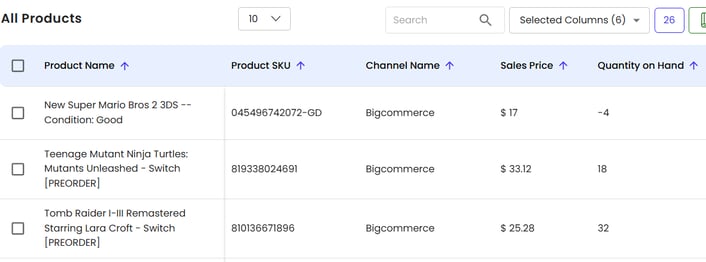
6. Use Connex Analytics to Track Inventory Between Summaries
Connex’s eCommerce analytics tool is designed for merchants who summarize sales in QuickBooks but still need accurate inventory across channels.
How it works:
- Connex imports your product catalog and stock levels from QuickBooks, using your accounting system as the source of truth.
- It downloads detailed orders from your sales channels (Shopify, Amazon, and more) and decrements inventory in real time as those orders come in.
- While QuickBooks only receives summary orders on your chosen schedule, Connex continuously tracks stock changes so you always know what is available to sell.
- When the summary reaches QuickBooks, its inventory position and the Connex analytics inventory stay aligned.
You get a real-time operational view of stock without flooding QuickBooks with individual orders.
7. Use Connex Order Manager for Fulfillment-First Workflows
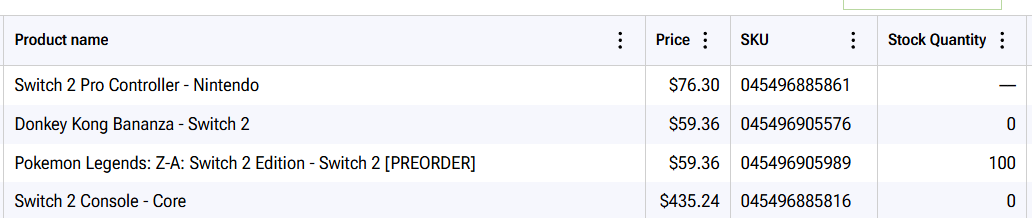
If your main pain is fulfillment (overselling, stockouts, multi-channel stock sync), Connex Order Manager gives you similar power focused on day‑to‑day operations.
With Connex Order Manager:
- Product and stock data sync from QuickBooks into Connex so your team sees current availability.
- Incoming orders from your channels decrement stock levels in Connex as they are imported.
- Connex can push updated stock quantities back out to your sites and marketplaces, helping prevent overselling.
- You can still post summary orders into QuickBooks, keeping the accounting file clean while using Connex as the operational hub.
This is especially useful if you fulfill from one shared pool of inventory across multiple channels.
8. Keep Accounting and Inventory in Sync Across All Channels
By combining summary orders with Connex tools, multi-channel sellers can:
- Eliminate journal entries that never relieve inventory.
- Avoid waiting for long settlement cycles before numbers move in QuickBooks.
- Maintain accurate, near real‑time inventory across Shopify, Amazon, and other channels.
- Keep QuickBooks fast, clean, and summary-based, even as order volume grows.
You get a workflow that scales with your channels and order volume, without a heavy, expensive inventory migration.
If you are summarizing sales into QuickBooks from Shopify, Amazon, and other channels but still struggling with inventory accuracy, Connex can bridge that gap.
Use Connex to:
- Create summary orders that relieve inventory correctly
- Track stock changes in real time as orders arrive
- Sync accurate inventory back out to your eCommerce channels
Ready to see how this would look with your channels and payouts? Schedule a workflow review with Connex and get a concrete plan to clean up your sales, settlement, and inventory processes—without switching systems.


