Connex_Infographics_03

Order fulfillment breaks down at the same points no matter what tools sit underneath it: routing to the right warehouse or 3PL, partial shipments, backorders, and getting status back to accounting once the order ships. Sellers usually reach for a standalone 3PL inventory tool, or start evaluating an ERP just to fix this one workflow.

Connex takes a third path, automating the fulfillment to accounting workflow between the systems you already run.

How Connex Solves It

 
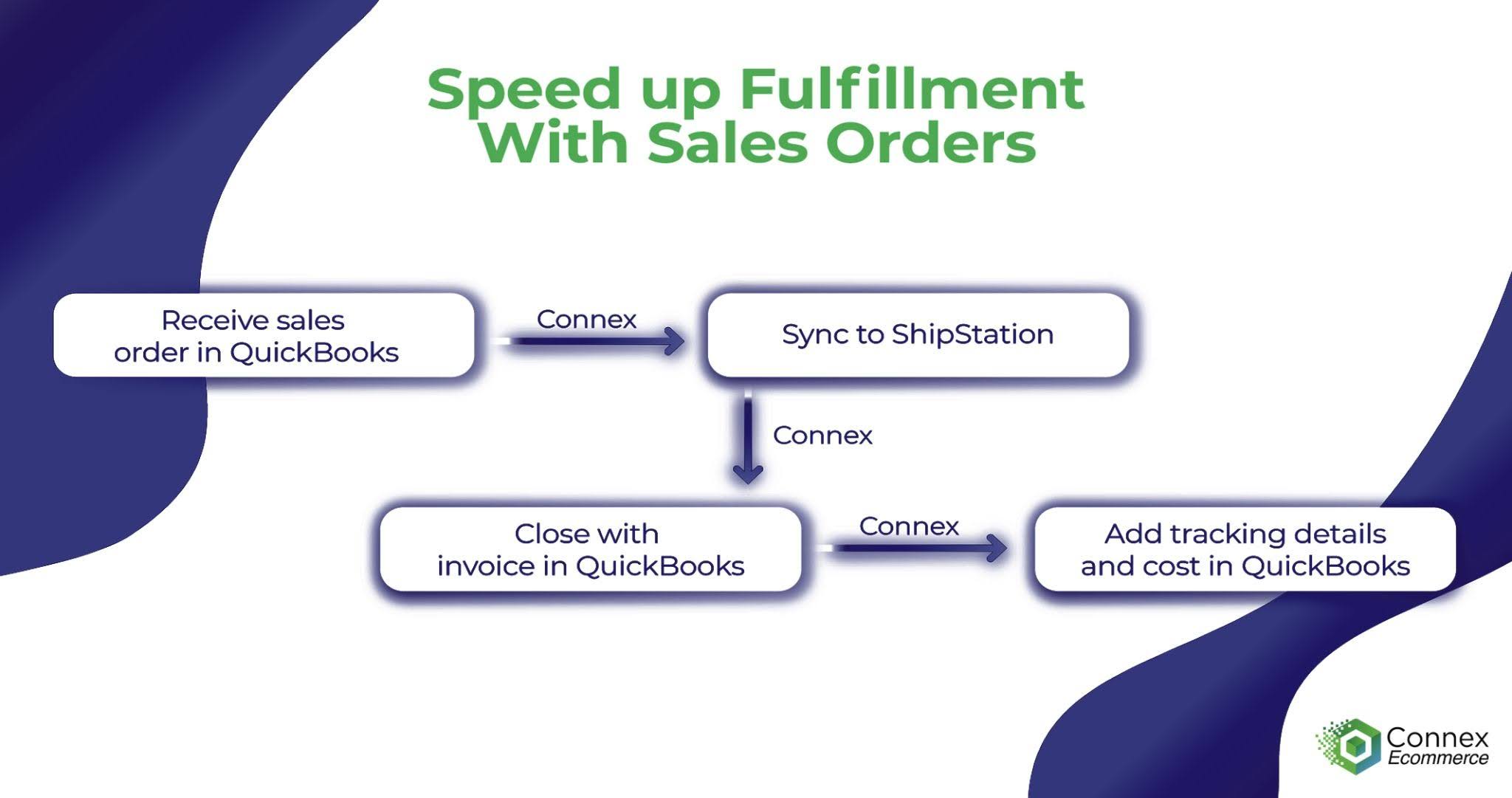
Connex applies routing rules across warehouses and 3PLs, manages partial shipments and backorders as they happen, and writes status and tracking back to your accounting system automatically. A standalone 3PL inventory tool solves inventory management on its own, and an ERP replaces your whole stack. Connex instead automates the workflow between the fulfillment and accounting systems you already have, so you get the automation without the cost or disruption of either alternative.
 
This fits teams running more than one warehouse or 3PL, dealing with partial shipments regularly, or currently evaluating a 3PL inventory system or an ERP because their fulfillment process has outgrown manual handling.
 

Where This Fits Across Systems

 
This workflow applies whether your fulfillment runs through ShipStation, ShipHero, a 3PL, or an in-house warehouse, and whether your accounting system is QuickBooks, Xero, NetSuite, or Sage Intacct. Wherever you run, the routing and reconciliation problem below is the same one worth solving.
Social Media (400 x 400 px) (26)-1

Automating B2B Order Fulfillment End to End

Automating B2B order fulfillment means the order, the warehouse routing, the shipment, and the accounting record all move as one workflow instead of four separate manual steps. Connex handles the routing and the handoff back to accounting together, rather than solving one piece and leaving the rest to a spreadsheet.
FREQUENTLY ASKED QUESTION
 
How do I automate B2B order fulfillment?
 
Connex applies your routing rules to send each order to the correct warehouse or 3PL, tracks partial shipments and backorders as they happen, and writes status and tracking back to your accounting system automatically once an order ships.
FREQUENTLY ASKED QUESTION
 
How is Connex different from a 3PL inventory tool?
 
A 3PL inventory tool manages inventory. Connex connects that inventory and fulfillment activity back to your accounting system automatically, so the two don't have to be reconciled by hand.

Standalone Inventory Tools vs. Connex

Standalone 3PL inventory tools are built to manage inventory across warehouses, and they do that job well. What they don't do is keep your accounting system in sync with what's happening on the fulfillment side without a separate integration.

Order Automation vs. ERP

An ERP solves fulfillment complexity by replacing everything at once: accounting, inventory, and fulfillment all move to one new system. That's a real project, with a real cost and a real timeline.

FREQUENTLY ASKED QUESTION
 
Do I need an ERP to handle multi warehouse fulfillment?
 
Not necessarily. Connex can absorb a lot of the complexity that pushes sellers toward an ERP, connecting your existing fulfillment and accounting systems instead of replacing them.
FREQUENTLY ASKED QUESTION
 
Can Connex handle billing for shipping differently across customers?
 
Shipping charges can be configured based on your workflow, including pass-through or markup scenarios.

Billing for Shipping

Some wholesale sellers bill customers for shipping, some don't, and some mark shipping costs up. That decision needs to carry through consistently from the fulfillment side to the invoice.

Fulfillment Status Back to Accounting

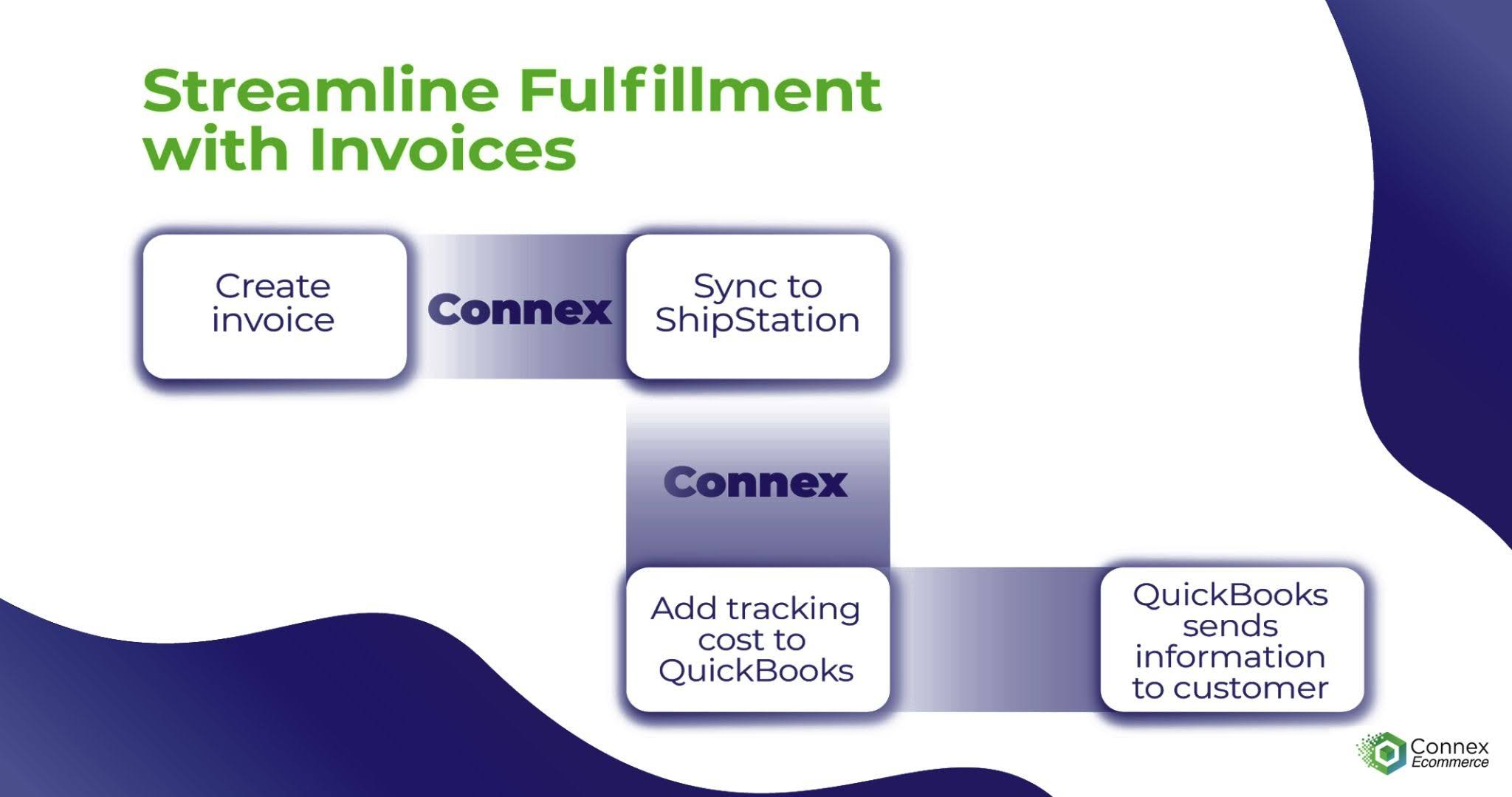
The moment an order ships, accounting can automatically receive the shipment status and tracking information based on your invoicing workflow. If invoices aren't updating after shipment, that usually means the fulfillment event and the accounting record aren't talking to each other at all.

FREQUENTLY ASKED QUESTION
 
Why are invoices not updating after shipment?
 
Usually because nothing is telling your accounting system that the order shipped. Connex closes that gap by syncing status and tracking back once an order ships, so the invoice updates without someone checking manually.
 
How do I keep fulfillment status in sync with my accounting system, regardless of platform?
 
Connex syncs status and tracking back to your accounting system once an order ships, closing the loop automatically instead of leaving it to a manual check.
294455355_582128980159890_7423254020284108663_n
Multi-channel operations

Fine Lines avoided a costly ERP migration by connecting Shopify, ShipStation, and QuickBooks with Connex

Instead of replacing tools their team already knew, Fine Lines used Connex to sync orders and inventory automatically, saving an estimated $60,000 in software and implementation costs.

"We were evaluating an expensive ERP migration to connect Shopify, ShipStation, and QuickBooks, but Connex gave us another option," saving an estimated $60,000 in software and implementation costs.


— Josh Stamper, COO, Fine Lines.

Proof

294455355_582128980159890_7423254020284108663_n
Order workflow automation

Fine Lines avoided an ERP migration and saved roughly $60,000 by staying on their existing stack with Connex.

Order workflow automation

Kaley Scott's team saved close to 40 hours a week migrating from ShipStation to ShipHero with Connex handling the sync.

Untitled design (1)-1
Order workflow automation

Loaded Boards saves more than 100 hours a month on fulfillment related accounting work.

ROI

See what manual fulfillment reconciliation is costing your team, on any platform.

Stop Wasting Time Fixing Broken Workflows

If your team is manually reconciling orders, inventory, or payouts, you’re paying for it in errors, delays, and lost visibility. Connex replaces patchwork integrations with a workflow that actually works—built for your systems and your process.

Related Workflows